
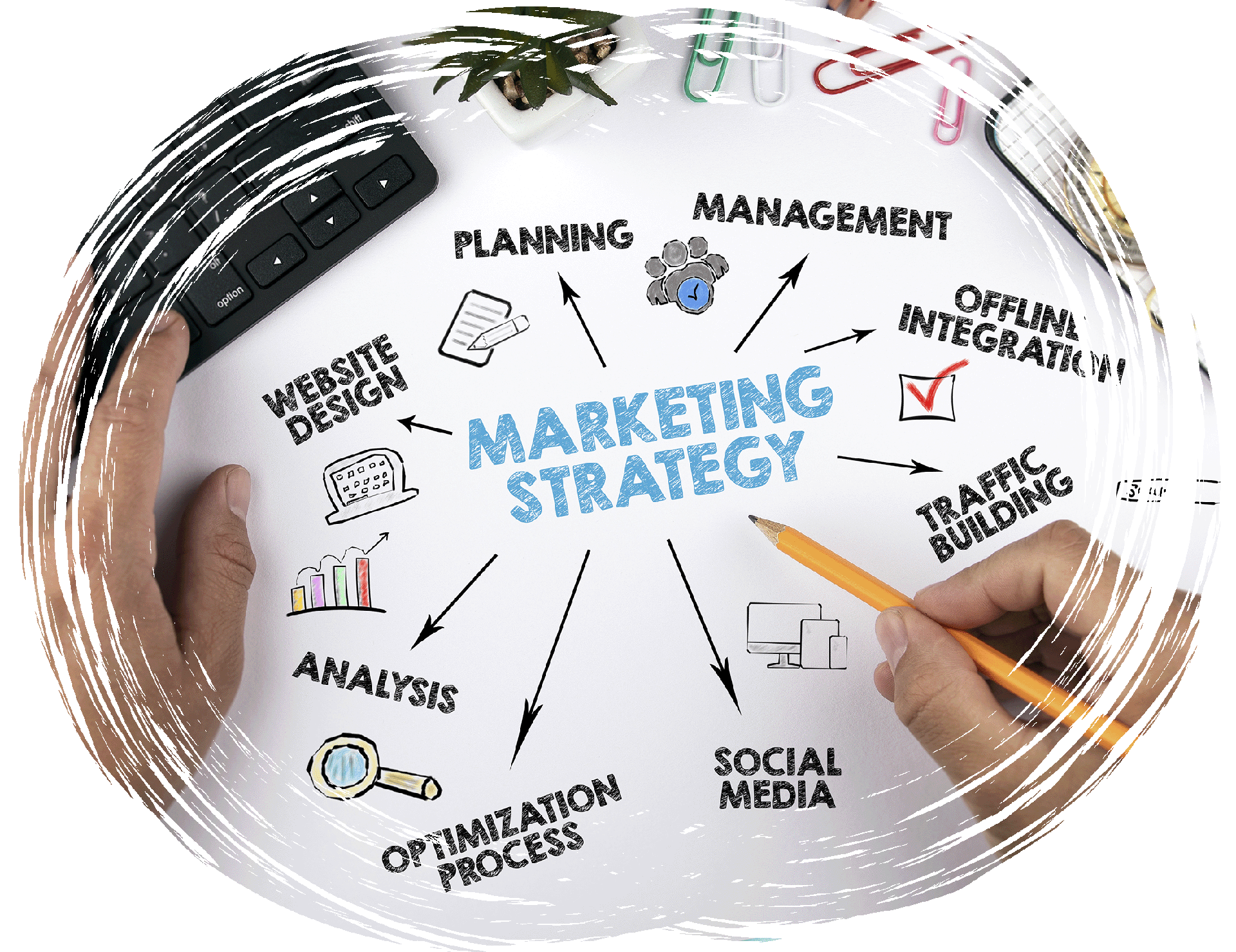
Understanding Why a Strategy Matters
A solid marketing strategy gives your work clarity, consistency and long-term direction. When content is created without a plan, it tends to drift. Topics become scattered, messaging becomes uneven and it becomes difficult to understand what is actually driving results.
A strong strategy supports both dependable long-term content and timely reactive content. Instead of treating the two as competing approaches, your plan helps you understand when each one contributes the most value. The structure and discipline of strategy give you stability, while the awareness and agility of reactive content keep you connected to what your audience cares about right now.
Building the Foundation of Your Content Marketing Strategy
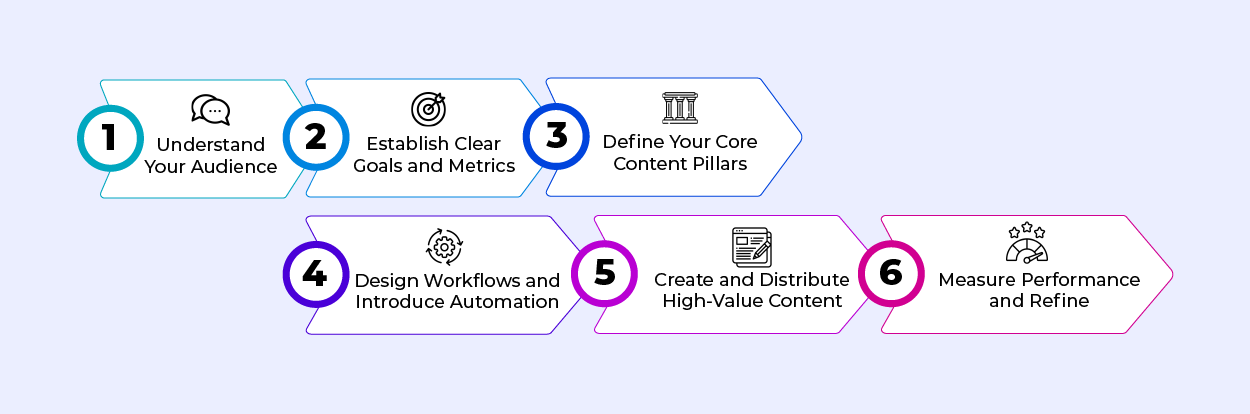
1. Understand Your Audience
Every successful marketing strategy begins with a clear understanding of who you intend to reach. An accurate audience profile does more than outline demographics. It captures the deeper motivations that influence decisions, the hesitations that slow progress and the recurring frustrations that create gaps your content can fill.
"
Every successful marketing strategy begins with a clear understanding of who you intend to reach
Frustrations are especially valuable to identify. They highlight what your audience struggles with, what discourages them and what slows their decision-making. When you build content that acknowledges these sticking points and provides clarity or relief, you create material that feels genuinely helpful. This type of content builds trust faster than general educational content and often performs better over time.
Understanding your audience at this level shapes everything that follows. It reveals which content topics matter, which formats will resonate and what tone will feel most authentic.
2. Establish Clear Goals and Metrics
Your content marketing needs to serve a purpose within your larger marketing strategy. You might want to grow visibility, support lead generation, strengthen customer loyalty or improve thought leadership in your category.
Once you define your goals, pair each one with a small set of meaningful metrics. If the goal is awareness, metrics might include search visibility or qualified traffic. If the goal is conversion, focus on contact submissions, click-through rates or lead quality.
Clear objectives ensure that every piece of content has a role. Metrics help you understand whether your strategy is moving you toward your broader business outcomes.
3. Define Your Core Content Pillars
Content pillars bring structure to your content marketing strategy. These pillars represent the main themes your brand will consistently create content around. Each pillar should reflect a strength of your brand and an area of genuine audience interest.
When you define your pillars clearly, planning becomes easier. Topics form naturally around each theme, and your content stays aligned with your brand’s strategic direction. Within each pillar, you can develop subtopics and establish topic clusters that strengthen your authority and improve your visibility in search.
Content pillars serve as the long-term roadmap for your editorial calendar and help maintain focus even when new ideas arise.
4. Design Workflows and Introduce Automation
A strong marketing strategy relies on consistent execution. Workflows give your team the structure needed to produce content predictably and efficiently. A typical flow involves idea collection, outlining, writing, editing, final review and distribution.
Automation enhances these workflows. It supports scale, reduces manual repetition and keeps your content aligned with timely audience interests. Automation can help surface relevant events, assist with early-stage drafting and make it easier to stay active across multiple channels.
Well-designed workflows keep your team organized. Automation helps keep your content marketing responsive without increasing workload.
5. Create and Distribute High-Value Content
With your foundations set, focus on producing content that offers genuine value. High-quality content answers important questions, explains complex ideas clearly or addresses frustrations your audience experiences.
Choose formats that align with audience behaviour. Some audiences prefer in-depth articles, while others respond more strongly to visuals, short videos or newsletters. Once created, distribute your content through a mix of owned channels like your website and email list, and then expand into shared or earned channels for additional reach.
To get more value from each piece, repurpose content. Turn long articles into short social posts, visuals, summaries or quick insights. Repurposing increases visibility without requiring entirely new assets every time.
5. Create and Distribute High-Value Content
With your foundations set, focus on producing content that offers genuine value. High-quality content answers important questions, explains complex ideas clearly or addresses frustrations your audience experiences.
Choose formats that align with audience behaviour. Some audiences prefer in-depth articles, while others respond more strongly to visuals, short videos or newsletters. Once created, distribute your content through a mix of owned channels like your website and email list, and then expand into shared or earned channels for additional reach.
To get more value from each piece, repurpose content. Turn long articles into short social posts, visuals, summaries or quick insights. Repurposing increases visibility without requiring entirely new assets every time.
6. Measure Performance and Refine
A marketing strategy needs regular evaluation. Reviewing your content marketing results helps you understand what resonates and what needs adjustment.
Look at performance across content pillars, formats and distribution channels. Identify patterns in topics that attract qualified visitors or formats that convert well. Just as important, identify what underperforms so you can adjust your approach.
Refinement turns your strategy from a static document into an evolving guide. Continuous improvement ensures that your content marketing remains effective over time.
Navigating Strategic Pitfalls and Opportunities
Striking the Balance Between Evergreen and Reactive Content
Evergreen content gives your brand stability. It builds long-term search visibility and provides resources your audience can rely on year after year. Reactive content keeps your brand timely. It responds to conversations, cultural moments and fast-moving trends.
Neither approach should stand on its own. Too much evergreen content can make your marketing strategy feel generic. Too much reactive content can make it inconsistent. A healthy balance helps you stay relevant in the moment while continuing to build lasting authority.
Personalization Should Enhance Clarity, Not Complexity
Personalisation can strengthen your content marketing, but only when it enhances clarity. The goal is not to create separate content for every audience variation. Instead, use personalisation to refine the tone, focus or depth of your material, making it feel more relevant without fragmenting your message.
Smart segmentation can improve performance, but your content pillars should remain the core structure of your marketing strategy.
Using Platforms Wisely While Prioritizing Your Own Channels
Social platforms are powerful tools, especially for reactive content. They help you join active conversations and respond quickly to what your audience cares about. But platforms are unpredictable, and their algorithms change often.
Your website and email list provide stability. They are the foundation of your long-term content marketing efforts. Use platforms to amplify your message, but anchor your strategy in channels you control.
Marketing Strategy Checklist
Use this checklist to build or evaluate your own marketing strategy:
▪️Identify and understand your core audience
▪️Document motivations, decision patterns and frustrations
▪️Define clear objectives for your content marketing
▪️Select meaningful metrics for each objective
▪️Establish 3 to 5 content pillars that reflect your strengths
▪️Build topic clusters within each pillar
▪️Define your content creation workflow
▪️Decide where automation will support your process
▪️Produce high-value content aligned with audience needs
▪️Distribute content across owned and shared channels
▪️Repurpose high-performing content for extended reach
▪️Review performance regularly
▪️Refine your strategy based on what resonates
Strong marketing strategies are built with intention and maintained with consistency. If you want support monitoring trends, simplifying workflows or staying active across channels without adding to your workload, ContentEngine can help. It brings automation into your marketing strategy, helps you stay timely with trending topics, assists with drafting and supports the rhythm of publishing across multiple platforms.